Start with movement.
Walkways, door connections, furniture zones, grill access, pool circulation, and views from inside the home should shape the layout before a pattern is selected.
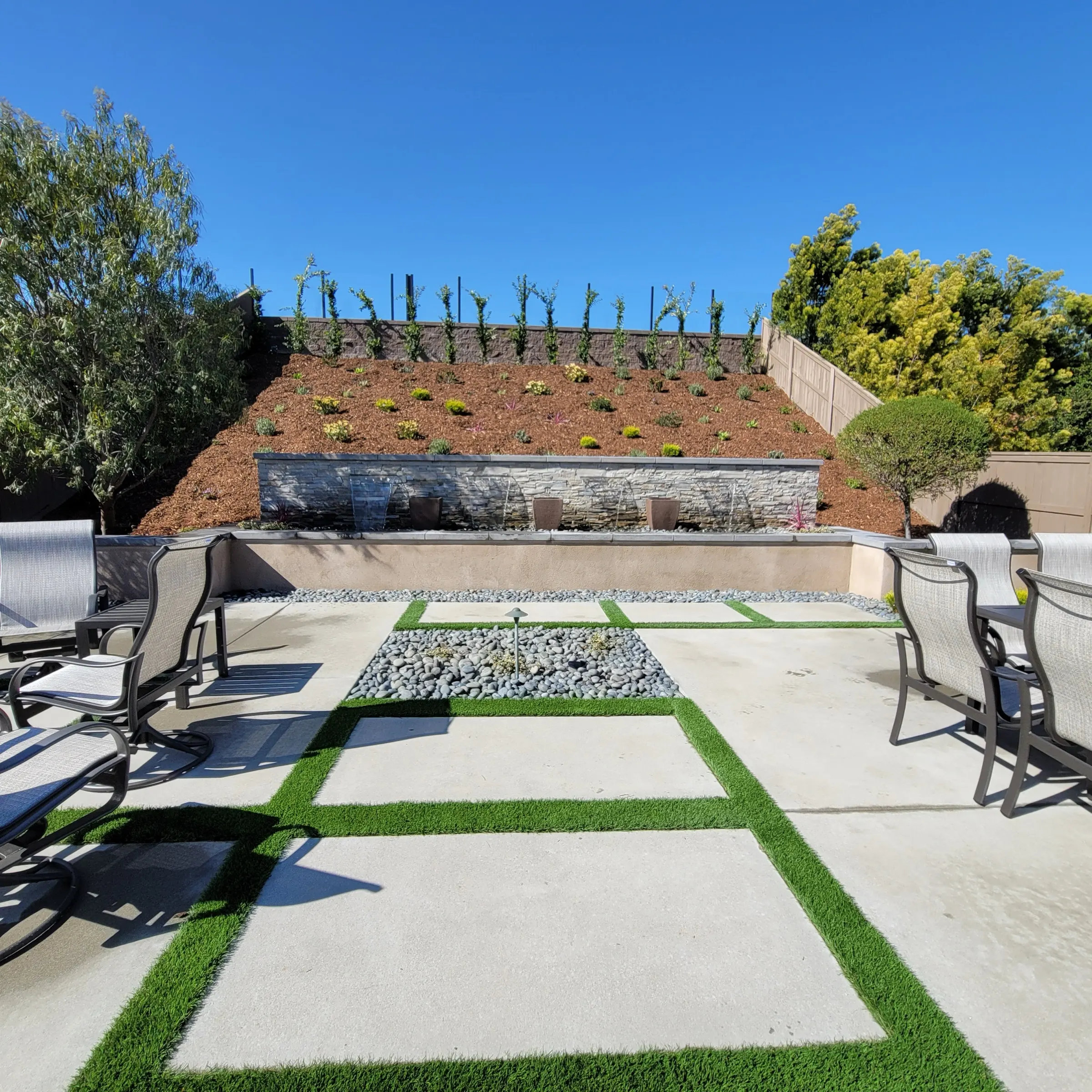
Turf + hardscape
planned as one space
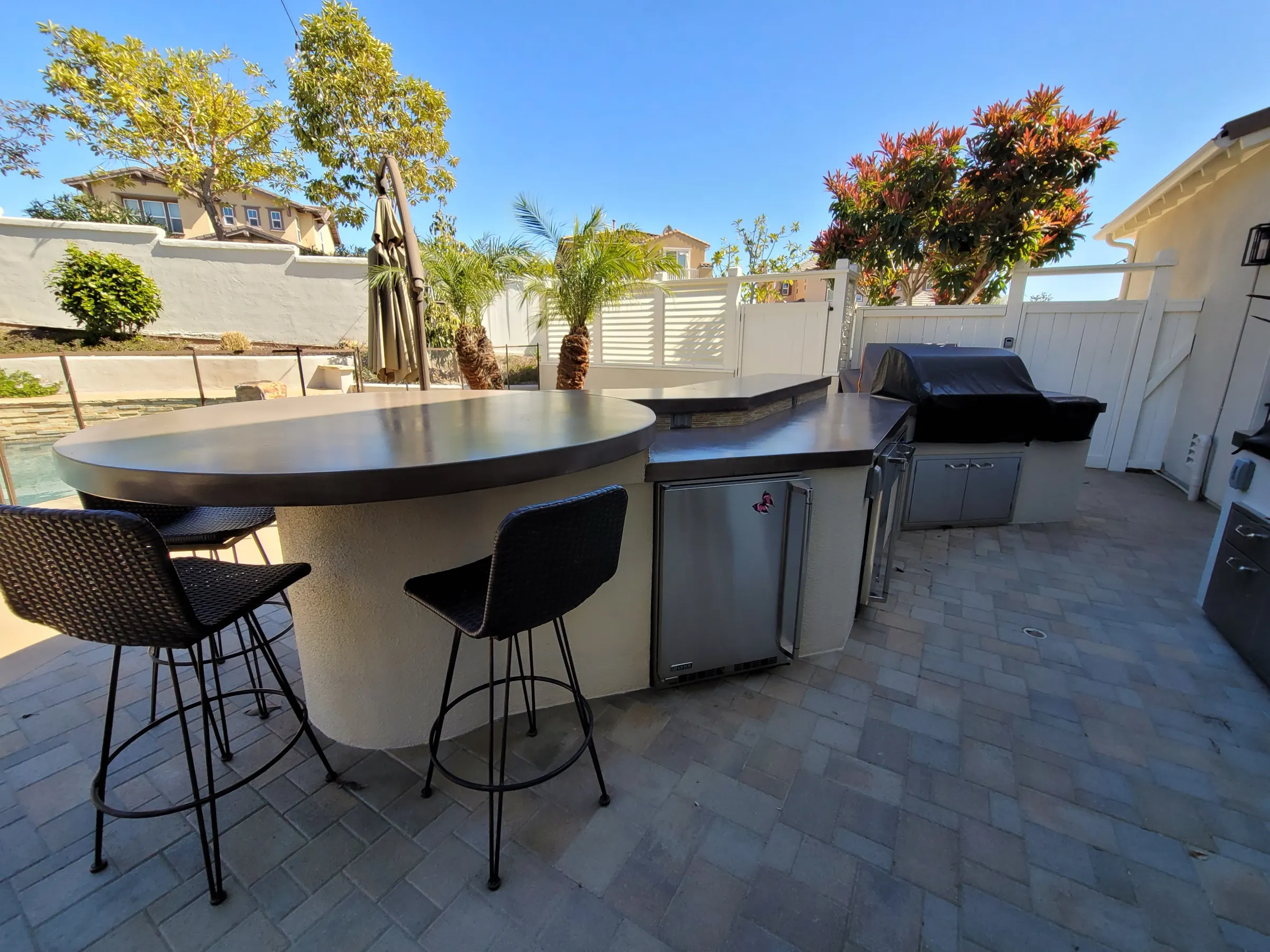
Paver installation · San Diego County
The short answer
Pavers can define patios, paths, gathering areas, pool transitions, and the structure around turf or planting. A successful installation begins with use, layout, base preparation, drainage, edges, and transitions.
Walkways, door connections, furniture zones, grill access, pool circulation, and views from inside the home should shape the layout before a pattern is selected.
Excavation, base depth, compaction, slope, bedding, edge restraint, joints, and drainage are central to the finished hardscape.
The meeting points between pavers, turf, planting, drains, steps, walls, doors, and existing concrete deserve the same attention as the field pattern.
The process
Define patios, paths, furniture, access, edges, and connections to the home.
Coordinate paver size, color, texture, pattern, borders, drainage, and adjacent materials.
Excavate as required, establish grade, place and compact the specified base and bedding.
Set pavers, complete cuts and edges, address joints, clean the surface, and review care.
Planning the investment
Useful pricing starts with the actual property and complete scope. These are the factors most likely to affect the work:
Questions homeowners ask
Neither is universally better. Appearance, budget, base conditions, drainage, repairability, movement, maintenance, and the intended use should guide the choice.
The surface requires a properly specified foundation. Exact excavation, base, bedding, joint, and edge details depend on site conditions and manufacturer guidance.
Yes, when grade, drainage, edge restraint, transitions, cleaning, and circulation are planned as one system.
Start with scale, architecture, space shape, cuts, borders, furniture, and the desired visual direction rather than the pattern in isolation.
Area, demolition, excavation, access, base and drainage work, material, pattern, cuts, borders, steps, and related landscape work affect pricing.
Sometimes, but the slab condition, elevations, door clearances, drainage, edges, and manufacturer requirements must all be reviewed first. Covering a failed or poorly drained slab can carry the existing problem into the new surface.
Not every paver requires the same treatment. Material, finish, joint system, desired appearance, stain exposure, and manufacturer guidance should determine whether sealing is appropriate and how it will be maintained.
Proper base and joint preparation plus routine cleaning can reduce weed growth, but outdoor joints cannot be guaranteed permanently weed-free. Seeds can settle from above and establish where debris and moisture collect.
Timing depends on area, demolition, excavation, access, base preparation, drainage, cuts, borders, steps, material availability, and related landscape work. A schedule should follow a complete site review and scope.
Recent work
View all projects
San Diego County
Tell us what is not working, how you want to use the yard, and what you are considering.