Practice with a purpose.
Cup locations, approach angles, distance variety, slopes, fringe, and recovery areas should reflect how you want to practice instead of simply filling the largest open area.
Turf + hardscape
planned as one space
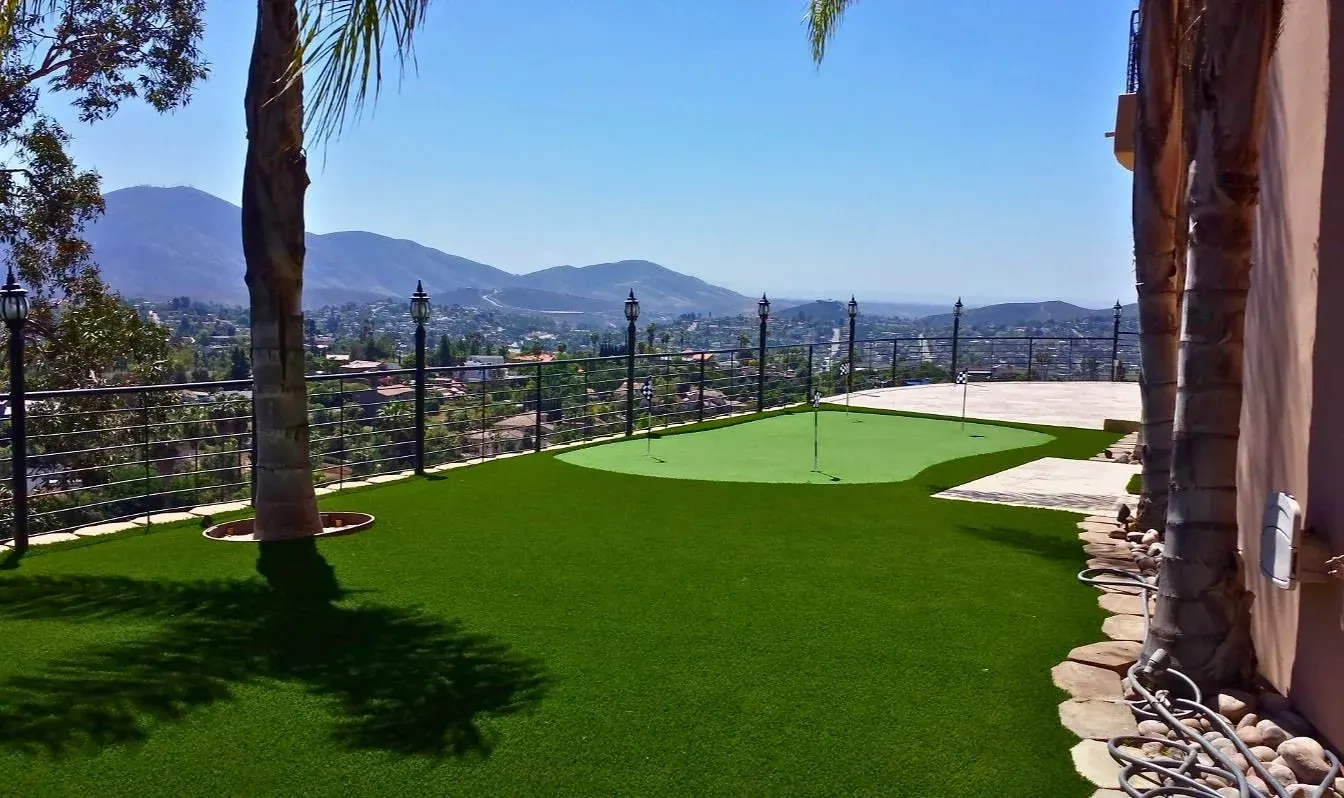
Backyard putting greens · San Diego County
The short answer
A backyard putting green should respond to available space, desired practice, drainage, surrounding landscape, and the way the yard is used when nobody is putting. Layout comes before decorative features.
Cup locations, approach angles, distance variety, slopes, fringe, and recovery areas should reflect how you want to practice instead of simply filling the largest open area.
The green can connect to turf, pavers, planting, lighting, seating, and existing architecture so it reads as a designed backyard feature.
More movement is not automatically better. A useful design balances interest with realistic practice, maintenance access, drainage, and the size of the site.
The process
Discuss distances, shot types, number of cups, fringe, and entertainment use.
Review shape, grade, drainage, access, nearby trees, architecture, and surrounding circulation.
Build the prepared base and contours, then install the putting surface, cups, fringe, and transitions.
Review roll, transitions, finish details, and product-specific care.
Planning the investment
Useful pricing starts with the actual property and complete scope. These are the factors most likely to affect the work:
Questions homeowners ask
There is no single required size. The useful minimum depends on desired shot length, cup locations, fringe, circulation, setbacks, drainage, and the shape of the yard.
Surface selection, installation details, contour, infill, weather, and maintenance can influence ball roll. Desired playing characteristics should be discussed during design.
That depends on the green’s size, shape, approach angles, desired practice variety, and circulation around the feature.
Fringe and approach areas can add practice variety and help connect the green to the surrounding landscape when the available space supports them.
Size, shape, access, demolition, contour work, base, surface, cups, fringe, borders, drainage, and surrounding improvements all affect scope.
Useful pricing depends on the green’s size, access, demolition, contours, base, surface, cups, fringe, borders, drainage, and surrounding work. A site-specific scope is more reliable than a generic square-foot estimate.
Water still needs a planned path away from the green and adjacent improvements. The drainage approach depends on grade, soil, base construction, surrounding surfaces, and existing runoff patterns.
San Diego County
Tell us what is not working, how you want to use the yard, and what you are considering.