Start with the site, not the sample.
A turf product is only one part of the finished yard. Existing grade, access, drainage, transitions, pets, play patterns, trees, and surrounding hardscape all shape the plan.
Turf + hardscape
planned as one space
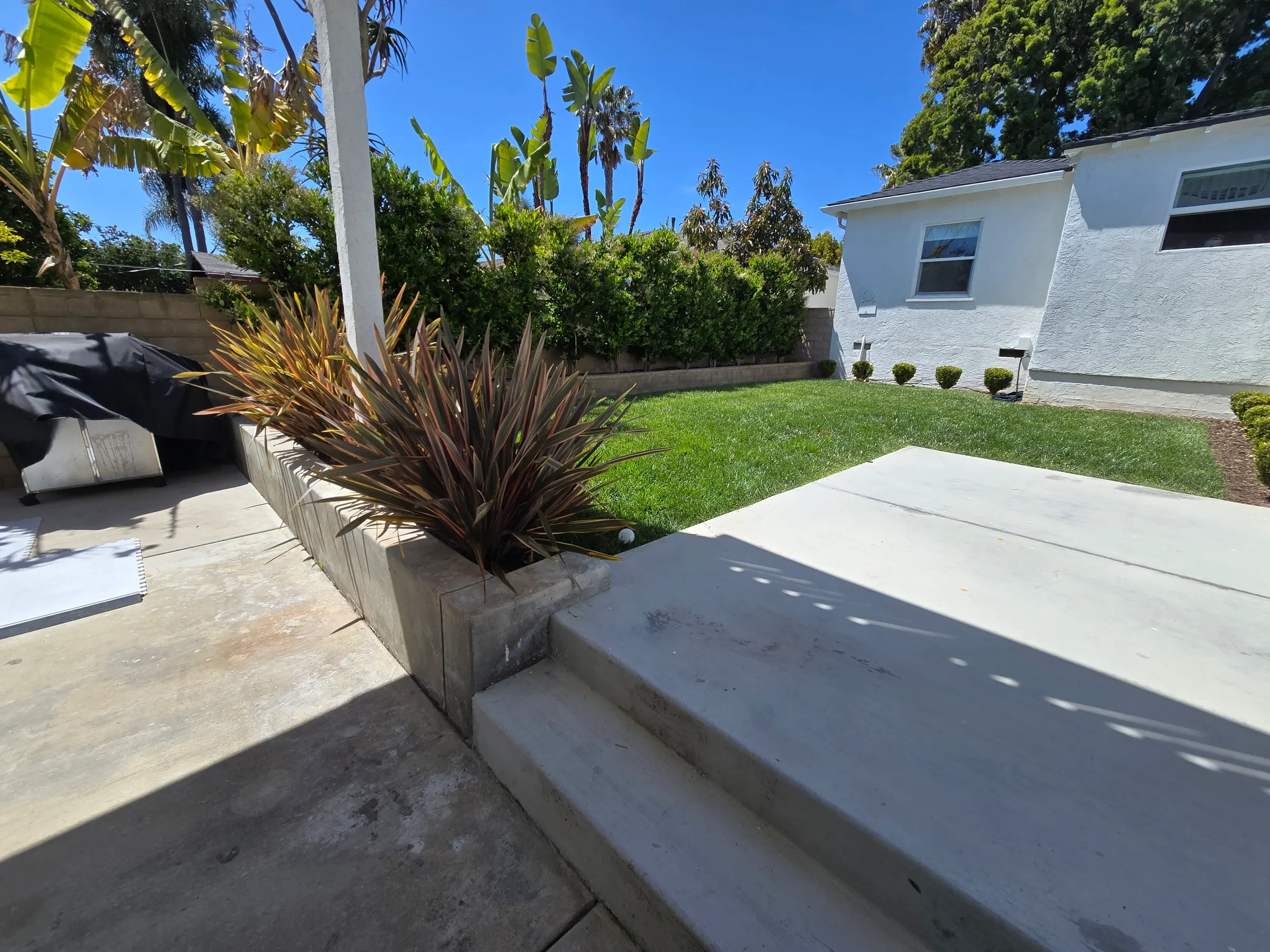
Artificial turf installation · San Diego County
The short answer
Artificial turf installation replaces a natural lawn or unfinished area with a planned synthetic surface. The right result depends on site preparation, drainage, product selection, edge details, and how the space will be used.
A turf product is only one part of the finished yard. Existing grade, access, drainage, transitions, pets, play patterns, trees, and surrounding hardscape all shape the plan.
A front lawn, side yard, pool edge, play area, and entertaining space place different demands on a surface. We help define the use first, then coordinate the turf and surrounding elements around it.
Base preparation, compaction, seam placement, edge restraint, drainage strategy, infill, and final grooming affect how the surface looks and performs. Those details should be discussed before work begins.
The process
Review access, grade, drainage, existing surfaces, edges, and intended use.
Compare turf characteristics and plan transitions, base, drainage, and surrounding features.
Remove or prepare the existing surface, build the base, place and secure the turf, then finish edges and infill.
Walk the completed area, discuss care, and address project-specific questions.
Planning the investment
Useful pricing starts with the actual property and complete scope. These are the factors most likely to affect the work:
Questions homeowners ask
Pricing varies with square footage, removal, access, grading, drainage, product choice, edges, and site complexity. A site review is the most reliable way to define the scope.
Water still needs a route through and away from the installation. The appropriate drainage approach depends on the existing grade, soil, adjacent surfaces, and how water currently moves through the yard.
Timing depends on area size, access, demolition, grading, drainage, borders, and related work. The project schedule should be confirmed after the site and complete scope are reviewed.
It can be planned beside many hardscape conditions, but transitions, drainage, edge details, heat, and pool-area use should be evaluated for the specific property.
Artificial turf is not maintenance-free. Routine debris removal, brushing, rinsing where appropriate, weed monitoring, and prompt attention to spills or pet waste may be needed.
Service life varies with the turf product, installation quality, sun exposure, traffic, pet use, maintenance, and site drainage. Review the written product and care information for the exact turf being considered instead of relying on one universal lifespan.
Synthetic surfaces can become hot in direct sun. Shade, exposure, turf and infill selection, surrounding hardscape, and when the area will be used should be discussed before materials are selected.
Good site preparation can reduce weed pressure, but no outdoor surface should be promised as permanently weed-free. Windblown seeds, edges, seams, and surrounding planting can still require maintenance.
Recent work
View all projects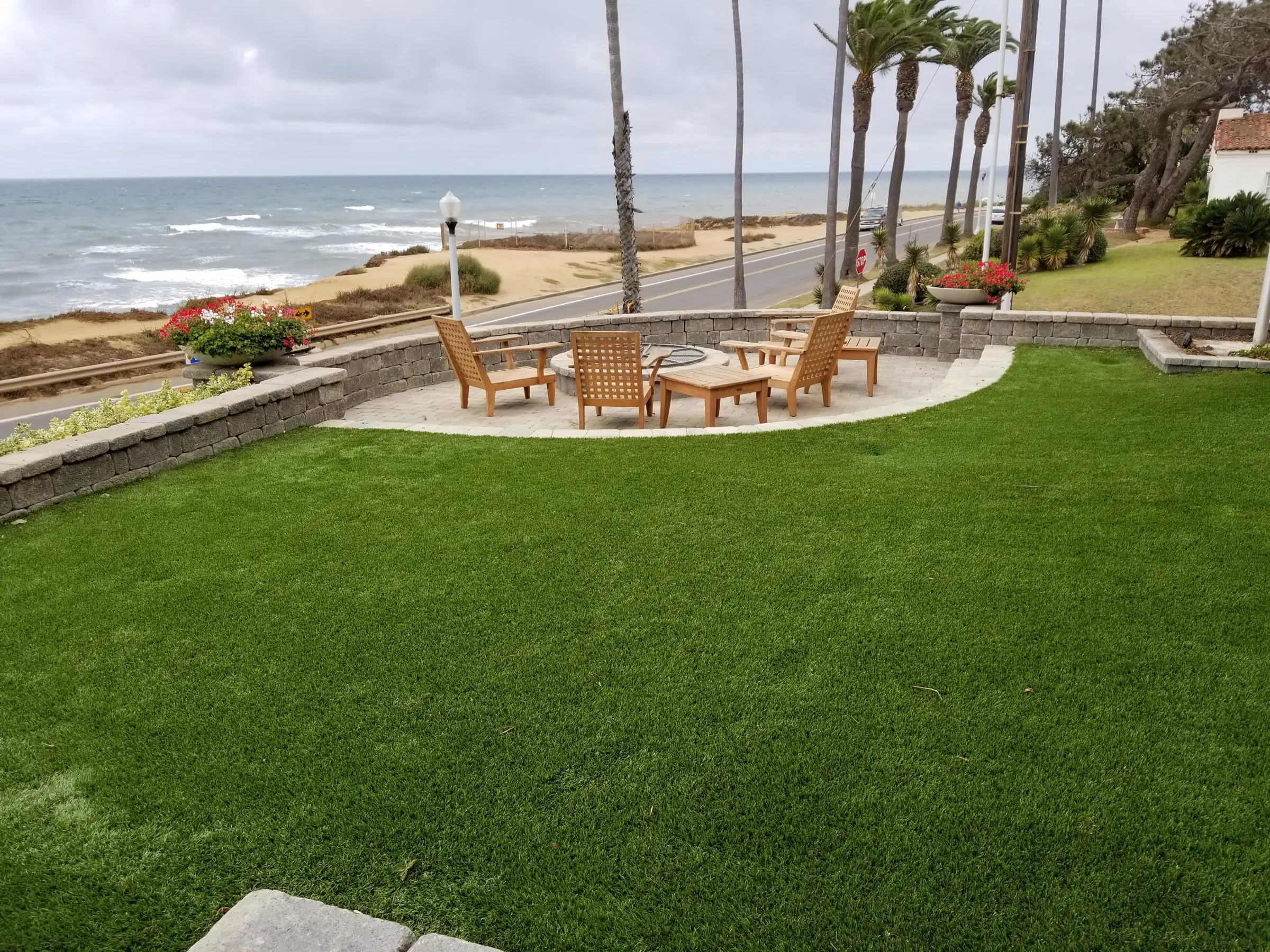
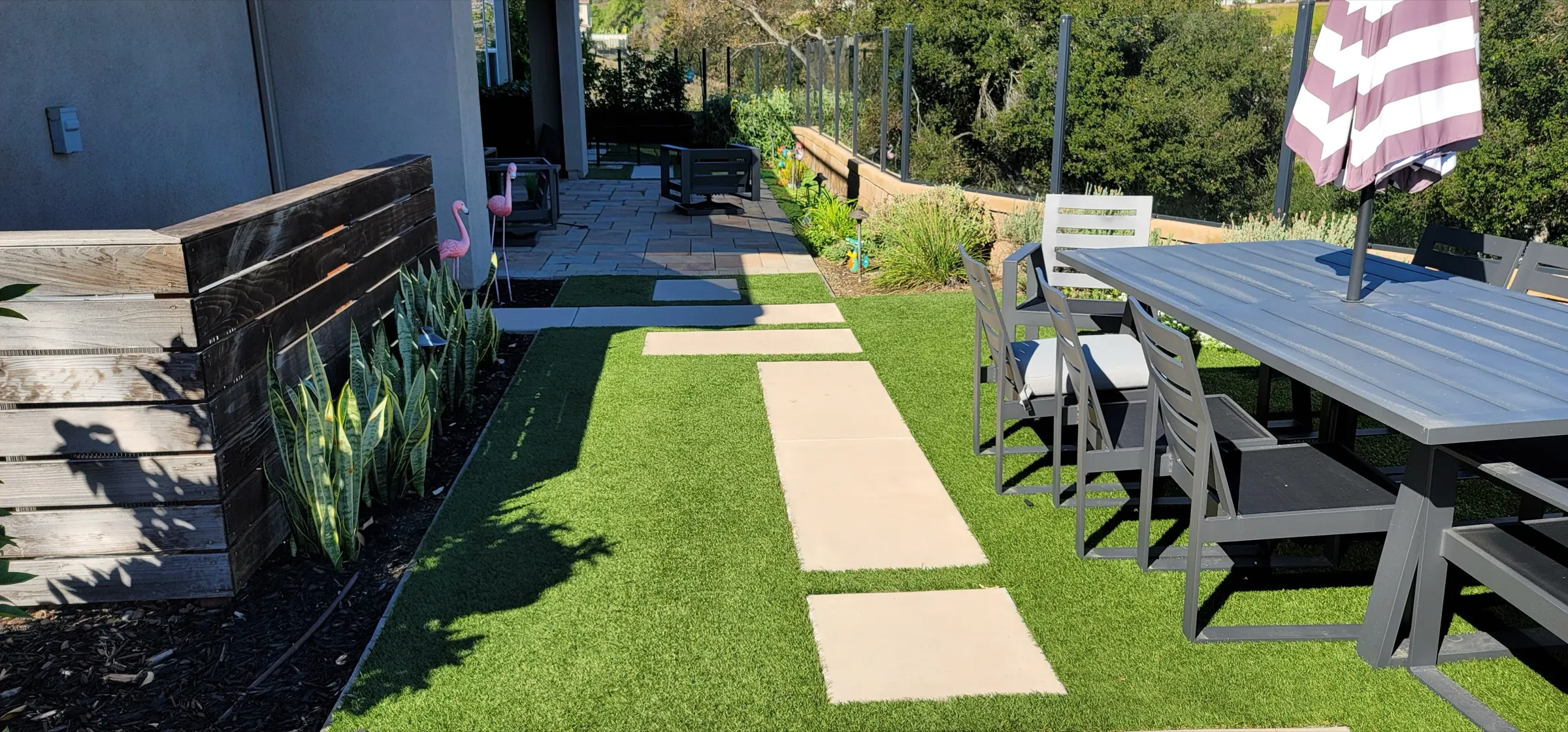
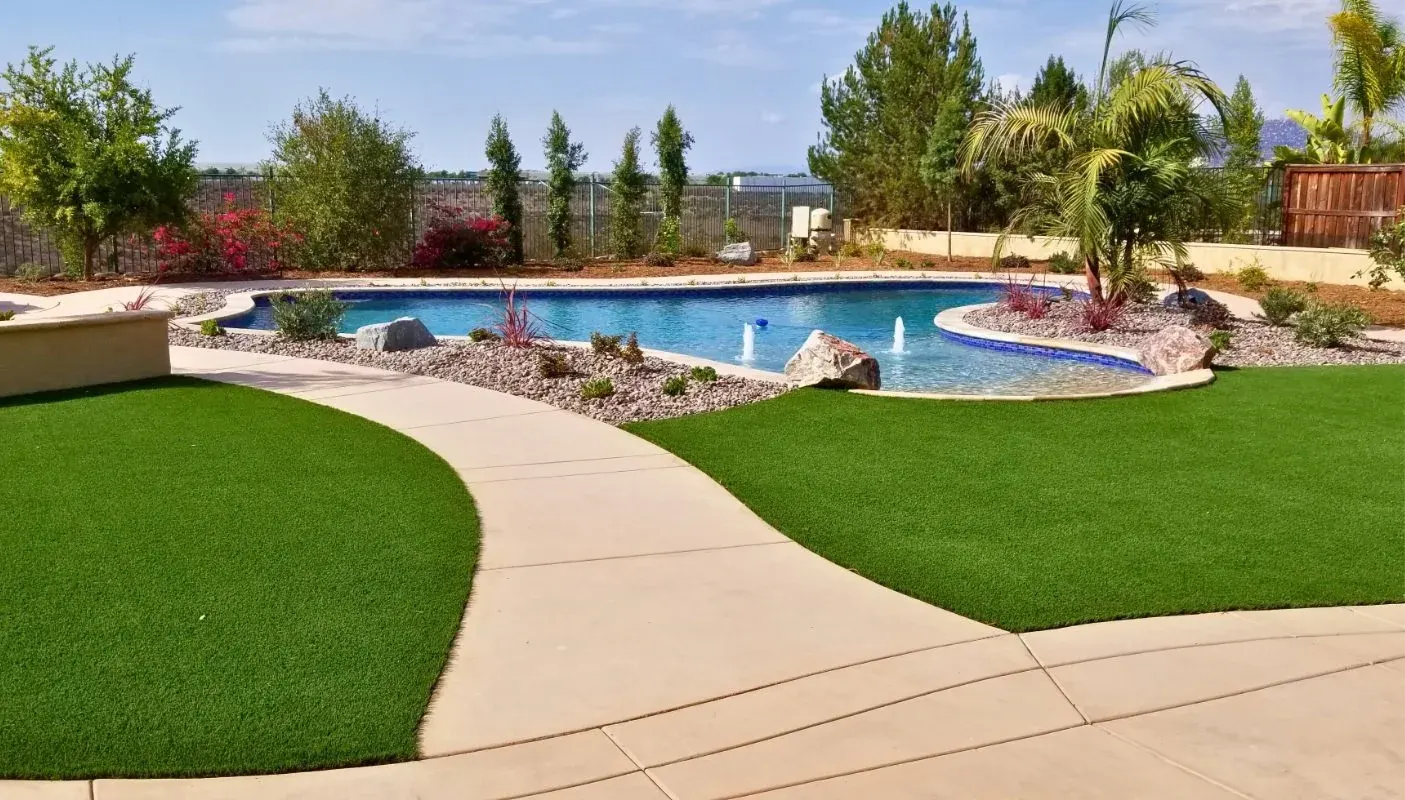
San Diego County
Tell us what is not working, how you want to use the yard, and what you are considering.